6 November 2026 | Fortuna Editorial Team
TikTok Shop’s US Policy Pulse, published on 5 November, highlights category-specific AI-content restrictions relevant to beauty, personal-care and health brands. Hong Kong exporters should review the pictures and sequence of a promotional video as carefully as its script.
What changed
The roundup dates the tightened short-video controls to 19 October 2026. It says AI-generated content must not demonstrate core product effects or product use in these categories, including synthetic experts and AI depictions of applying skincare or taking supplements.
The accompanying health guide warns that a softer or more realistic-looking AI efficacy scene is not a solution. The beauty guide likewise rejects AI demonstrations of core effects. This is US TikTok Shop guidance; it does not establish the rules for UK Meta advertising or another sales channel.
Fortuna perspective
Our recommendation is to review what a viewer will infer from the whole sequence. Removing a written claim is insufficient when images still suggest that using a product produces an outcome. A neutral caption cannot reliably undo a strong visual promise.
For a Hong Kong brand commissioning overseas creators, the brief should identify which scenes require real footage, what the product actually does and which claims have supporting evidence. Give the reviewer the complete edit, including transitions, music and captions. A shot that looks neutral in isolation can acquire a different meaning when placed after a distress scene or before an improvement scene.
A practical production review
1. Inventory the assets used in each video: original camera footage, stock material, synthetic people, generated backgrounds and edited product images. Keep their origins clear.
2. Remove prohibited AI efficacy or product-use scenes. Do not simply make a disallowed transformation subtler. Where a real demonstration is appropriate, commission truthful footage and review its claims separately.
3. Compare the final cut with the actual product, packaging and product-detail page. Escalate any discrepancy instead of assuming a creator’s creative interpretation is harmless.
4. Write usage permissions and review responsibilities into the production brief. Ask creators to disclose their production methods before final approval so the brand can assess the finished asset accurately.
5. Recheck the destination market and channel before reuse. Maintain separate approved versions when platform rules or local claim requirements differ.
The business objective is a repeatable production process with fewer rejected assets. AI can assist a team, but the brand still needs to understand the claim made by the final video.
About Fortuna
Fortuna helps Hong Kong brands prepare overseas e-commerce, creator marketing, marketplace operations and import-compliance workflows. https://www.fortuna-online.org/
References
TikTok Shop US, Policy Pulse, 5 November 2026:
https://seller-us.tiktok.com/university/essay?knowledge_id=6747273381791534
Health AI-Generated Content Guide and FAQ, 16 October 2026:
https://seller-us.tiktok.com/university/essay?knowledge_id=4725299473336072
Beauty & Personal Care AI-Generated Content Best Practices and FAQ, 16 October 2026:
https://seller-us.tiktok.com/university/essay?knowledge_id=4744798490527496
Disclaimer: this is editorial analysis, not legal or medical advice. Platform approval does not establish compliance with every applicable advertising law.
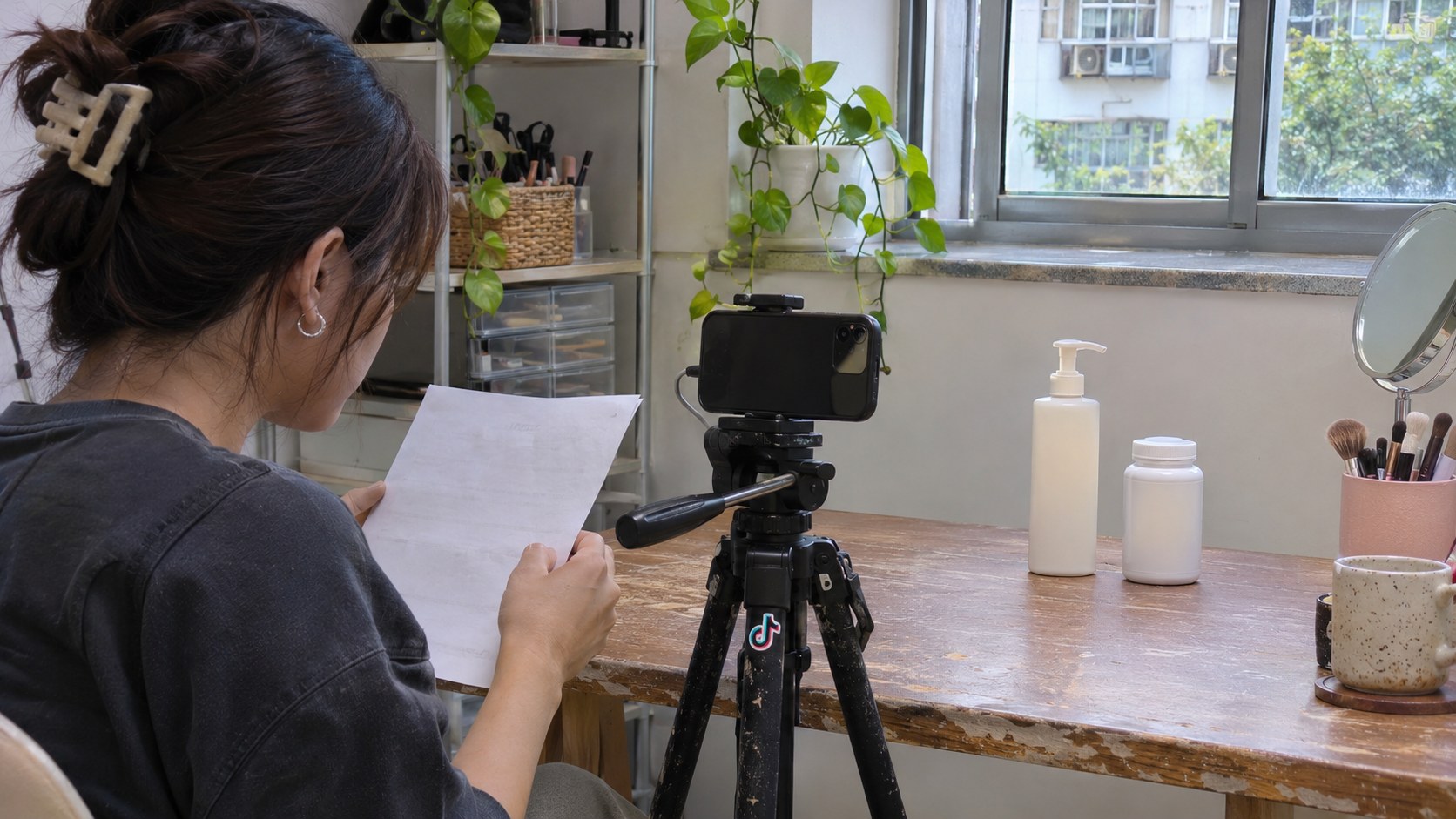
Cover disclosure: AI-generated photorealistic editorial image; not a photograph of an actual event. The cover depicts a filming setup, not a product effect or product-use demonstration.